
WELLNESS | DANA POINT & SOUTH ORANGE COUNTY
Equine Therapy in Orange County
Equine therapy — also known as equine-assisted psychotherapy — is an experiential, evidence-informed therapeutic modality that uses interactions with horses as a vehicle for emotional growth, trauma processing, and behavioral change. Horses are uniquely attuned to human emotional states, responding in real time to what a person is feeling and projecting — often before the person themselves is aware of it. That immediate, honest feedback creates therapeutic opportunities that are difficult to replicate in a traditional clinical setting.
At South Orange County Wellness, equine therapy is available as an optional experiential enhancement for enrolled clients — offered alongside, not instead of, individual therapy, group therapy, and evidence-based clinical treatment. Sessions are facilitated by a licensed therapist and certified equine therapy professionals, and are designed to connect the experience directly to each client’s recovery goals.
Find out if your insurance will cover the cost of treatment.
"*" indicates required fields
How Equine Therapy Works
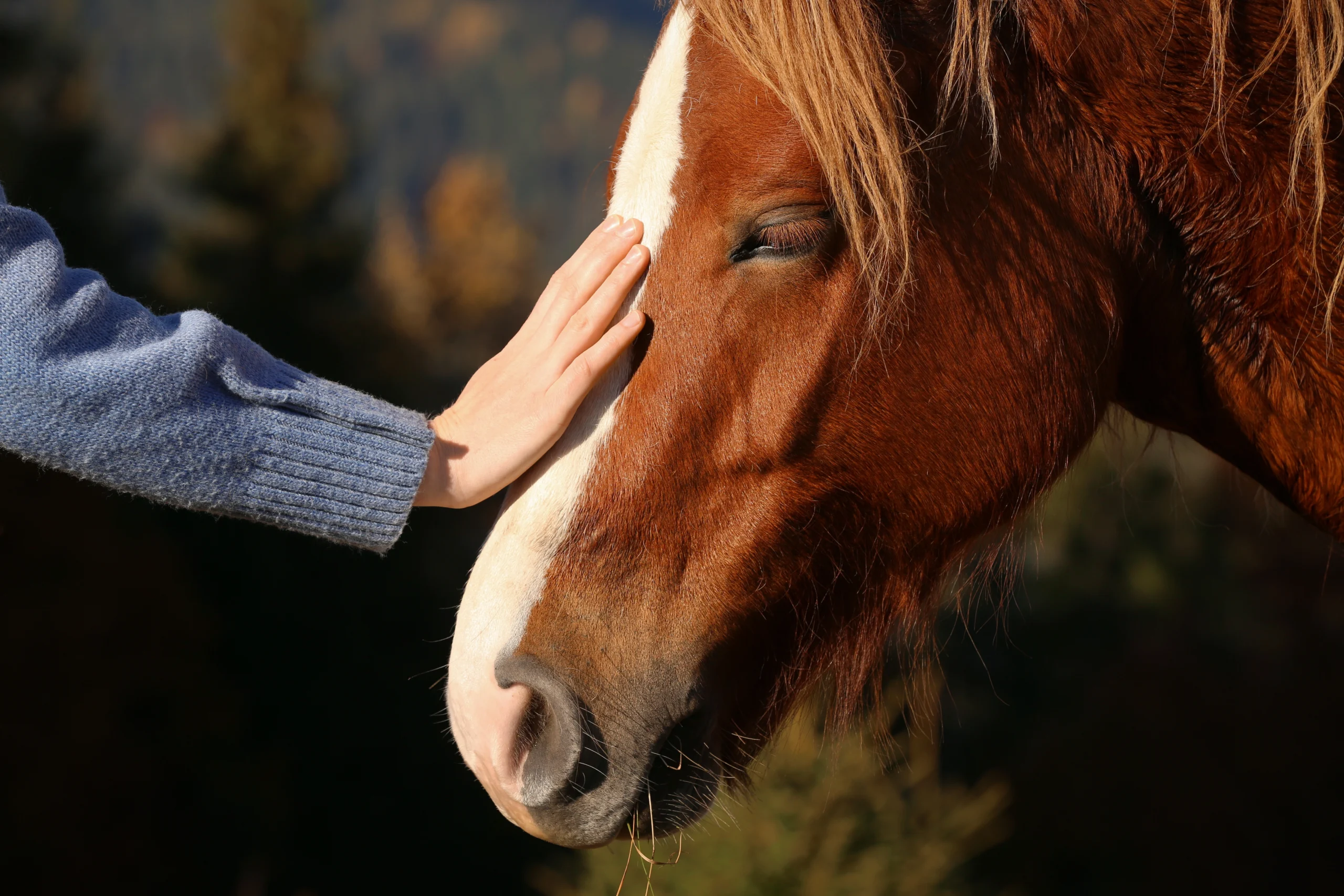
Horses are prey animals — highly sensitive to their environment and exquisitely attuned to the emotional states of the people around them. They respond authentically to what a person is projecting, without judgment, without agenda, and without the social filtering that humans bring to every interaction. That honesty is the therapeutic core of equine-assisted work.
In a structured equine therapy session, clients don't simply ride horses — they engage with them through groundwork activities facilitated by a licensed therapist and certified equine professionals. The horse's responses become a mirror: reflecting emotional patterns, relational dynamics, and nervous system states that might take months to surface in a traditional therapy room.
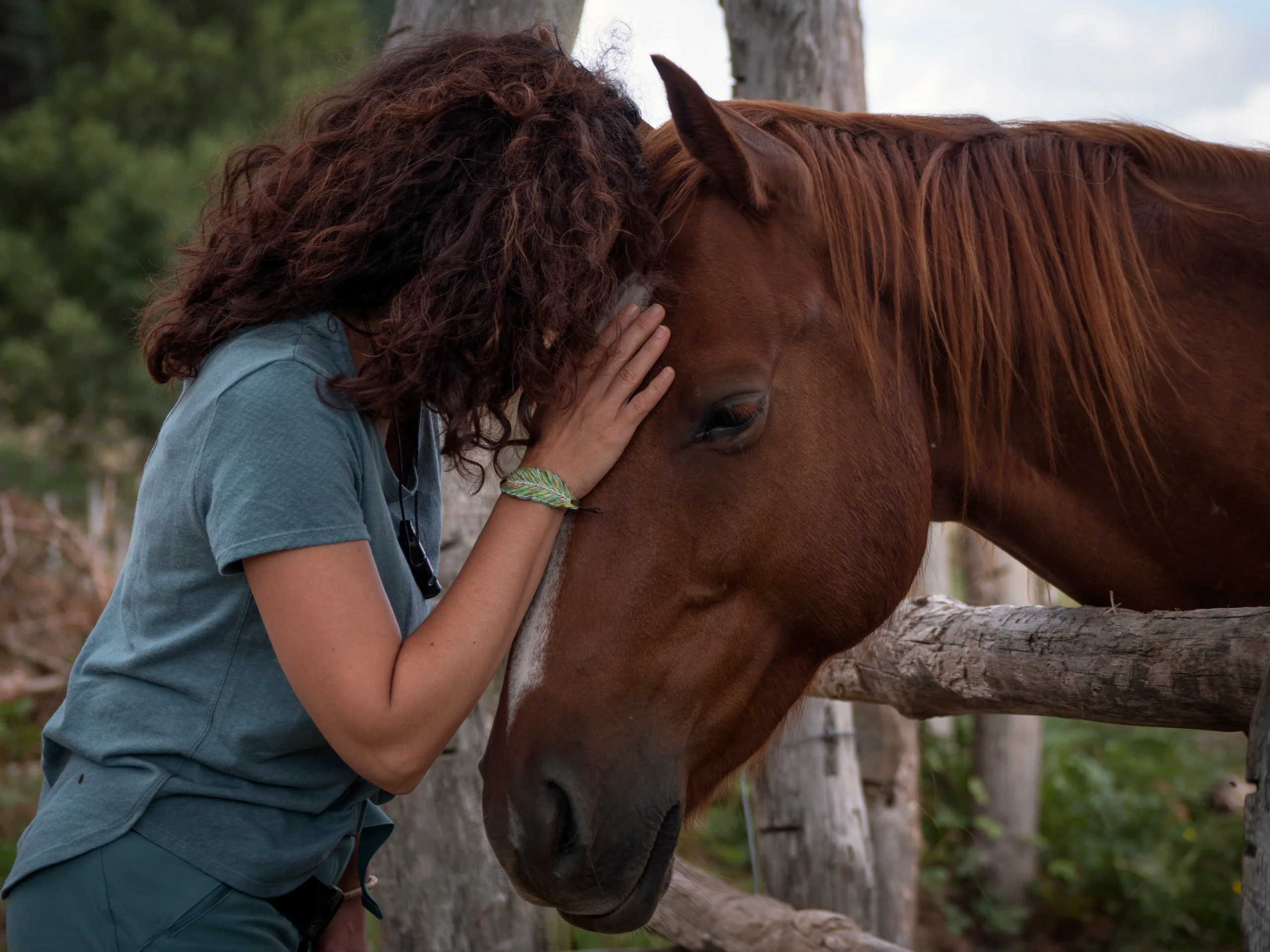
For clients working through trauma, attachment wounds, anxiety, or difficulty with emotional regulation, the immediacy of that feedback — and the experience of building trust with a large, powerful animal — can be genuinely transformative in ways that complement and deepen clinical work.
What Equine Therapy Supports
Research and clinical experience with equine-assisted therapy consistently point to meaningful benefits across several areas — particularly for clients working through trauma, anxiety, and relational difficulties.
Trauma Processing
Horses respond to nervous system activation in real time — making them uniquely effective partners for trauma work. The grounded, non-threatening presence of a horse can support regulation in ways that facilitate deeper processing.
Emotional Regulation
Working with horses requires emotional attunement and self-regulation — skills that transfer directly to daily life. Clients learn to notice and manage their emotional states in response to the horse's immediate feedback.
Anxiety Reduction
The rhythmic, grounding nature of equine interaction — combined with outdoor settings and physical engagement — supports nervous system downregulation and has been associated with meaningful reductions in anxiety symptoms.
Trust & Attachment
For clients with attachment wounds or difficulty trusting others, building a relationship with a horse — on the horse's terms — provides a safe context for practicing trust, attunement, and relational repair.
Self-Efficacy
Successfully communicating with and earning the trust of a large animal produces a genuine sense of accomplishment and capability — particularly meaningful for clients whose depression or trauma has eroded their confidence.
Mindfulness & Presence
Horses demand full presence — they respond to distraction, tension, and inattention immediately. Sessions naturally cultivate the kind of present-moment awareness that clinical mindfulness work aims to develop.
Equine therapy at South Orange County Wellness is an adjunct to clinical treatment — not a standalone intervention. Its value is in how it complements and deepens the individual and group therapy work clients are already doing.
What an Equine Therapy Session Looks Like
Orientation & Check-In
Sessions begin with a structured check-in facilitated by the licensed therapist — grounding participants, setting intentions, and connecting the day's experience to each client's treatment goals.
Introduction to the Horse
Participants are introduced to the horse in a calm, supported environment. Certified equine professionals guide safety orientation and help clients begin building initial connection and awareness.
Groundwork Activities
Sessions typically involve groundwork — leading, grooming, or working alongside the horse — rather than riding. The horse's responses to each interaction are observed and processed with the therapist in real time.
Therapeutic Processing
The therapist facilitates reflection on what arose during the session — connecting the horse's responses, the client's emotional reactions, and the relational patterns observed to ongoing clinical themes.
Integration & Closing
Sessions close with a structured integration — grounding, reflection, and connection back to treatment goals. Clinical notes from the session are integrated into the client's overall care record.
Who Benefits Most From Equine Therapy
Equine therapy is particularly well-suited for clients who:
- Are working through trauma, PTSD, or complex trauma
- Struggle with trust, attachment, or relational difficulties
- Experience anxiety or emotional dysregulation
- Have found traditional talk therapy limiting or difficult to engage with
- Are in recovery from substance use and seeking healthy connection
- Have difficulty accessing or expressing emotions verbally
- Are working on building self-confidence and self-efficacy
- Feel disconnected from their bodies or the present moment
No prior experience with horses is required — and in many cases, clients with no equine background find the experience more powerful precisely because of that unfamiliarity.
Equine Therapy as Part of Your Program
Equine therapy at South Orange County Wellness is offered as an optional experiential enhancement for enrolled clients — available alongside, not instead of, individual therapy, group therapy, and evidence-based clinical treatment.
Sessions are scheduled as structured therapeutic outings facilitated by a licensed therapist and certified equine professionals. Participation is determined by your clinical team based on your goals and clinical appropriateness.
If equine therapy is something you're interested in, mention it during your admissions conversation or to your clinical team once enrolled.
Interested in Equine Therapy?
Let your admissions coordinator or clinical team know. We'll walk you through availability, appropriateness for your program, and what to expect from your first session.
Talk to AdmissionsFrequently Asked Questions About Equine Therapy
Some breakthroughs don't happen in a therapy room.
Equine therapy offers something different — a direct, embodied experience of trust, presence, and connection. Ask about it when you reach out.
Talk to Admissions