
WELLNESS | DANA POINT & SOUTH ORANGE COUNTY
Peptide Therapy in Orange County
Peptides are short chains of amino acids that act as signaling molecules throughout the body — influencing everything from cellular repair and inflammation to mood, energy, and cognitive function. Peptide therapy involves the targeted use of specific, research-backed peptides to support physiological processes that are frequently disrupted by chronic stress, trauma, and mental health conditions.
At South Orange County Wellness, peptide therapy is available as an optional wellness enhancement for enrolled clients — administered under qualified medical oversight and tailored to your individual health profile and goals. It is not a treatment for mental health conditions. It’s a physiological support tool for clients who want to address the biological dimension of recovery alongside their clinical work. Sessions are available on-site at our San Juan Capistrano location, minutes from Dana Point.
Find out if your insurance will cover the cost of treatment.
"*" indicates required fields
What Are Peptides — and How Do They Work?
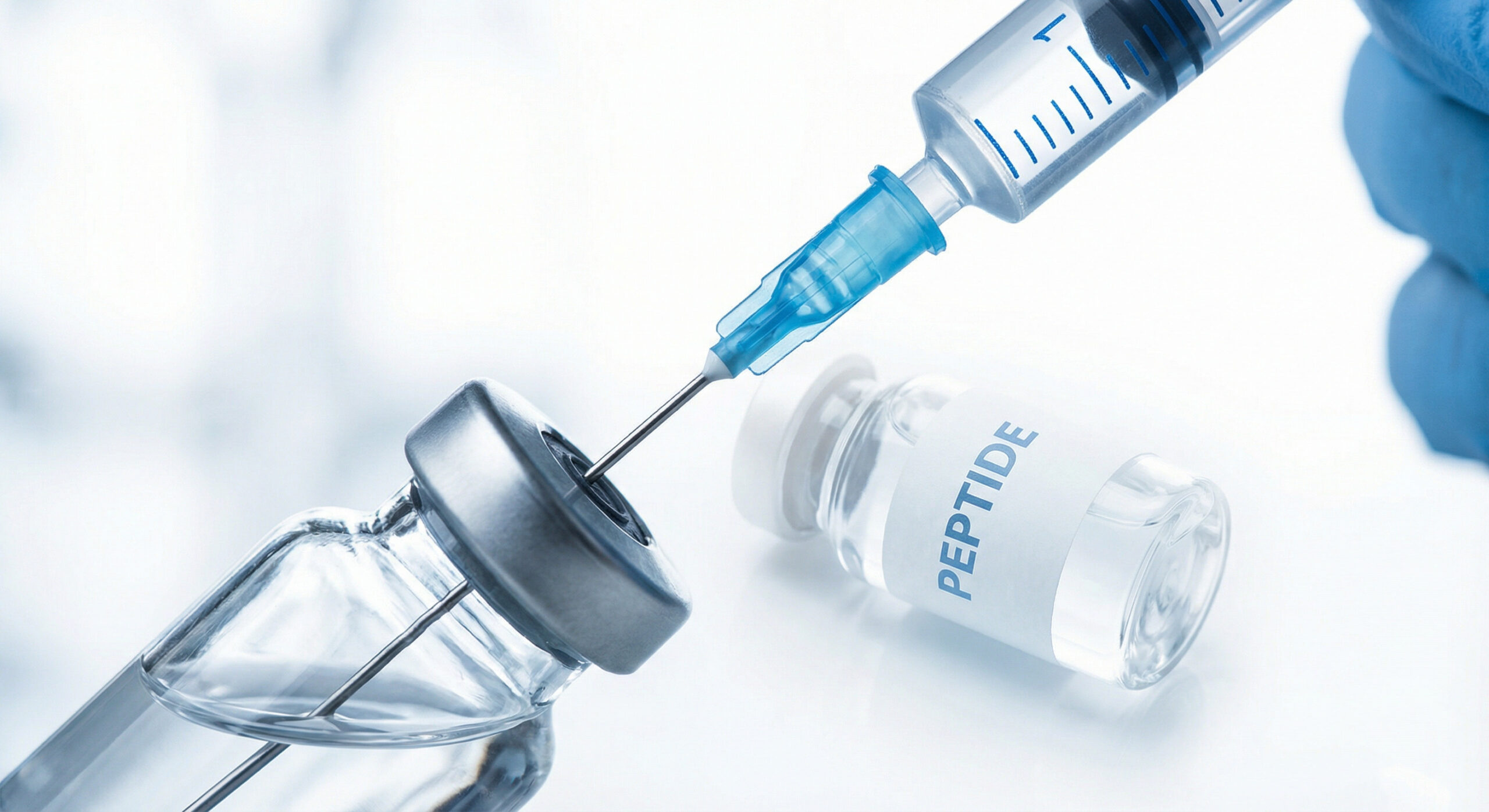
Peptides are short chains of amino acids — the building blocks of proteins. Unlike larger proteins, peptides are small enough to interact directly with cell receptors throughout the body, acting as signaling molecules that may trigger specific biological responses.
The body produces many peptides naturally, each with distinct functions — regulating inflammation, supporting tissue repair, influencing neurotransmitter activity, and more. Research into synthetic peptides as therapeutic agents is growing, particularly in the areas of cognitive support, inflammation, and stress resilience.
It's important to be transparent about where the science stands: most peptides being explored for mental health applications are experimental. The majority have not received FDA approval specifically for treating psychiatric conditions, and much of the human evidence is still limited. At South Orange County Wellness, peptide therapy is offered under physician supervision, with full transparency about the current state of evidence for each protocol.
A Note on the Evidence
Research into peptides for mental health is growing and genuinely promising in some areas — but it's important to be clear about where things stand. Most peptides being explored for psychiatric applications are experimental and are not FDA-approved specifically for treating depression, anxiety, PTSD, or other mental health conditions.
Some have been studied in animal models with encouraging results. Others have human evidence — primarily from European and Russian clinical literature — that supports their use in specific contexts. A small number have FDA approval for other indications and are used off-label under physician supervision.
At South Orange County Wellness, peptide therapy is offered only under physician supervision, with full transparency about the evidence base for each protocol. It is never presented as a primary treatment for any mental health condition — only as an adjunct to clinical care, for appropriate clients, after a thorough medical evaluation.
Peptides With the Strongest Research Interest
The following peptides have the most compelling early evidence for mental health and recovery applications. Protocols are individualized — not every peptide is appropriate for every client, and all recommendations are made following a thorough medical evaluation.
Selank
Best suited for: Anxiety, stress, cognitive complaintsAn anxiolytic peptide that may reduce anxiety and improve stress resilience without sedation. Some human studies — primarily from Russia — suggest potential benefits for focus and memory. Generally considered one of the better-tolerated options in this category.
Semax
Best suited for: Depression with cognitive symptoms, brain fogMay improve attention, executive function, and has shown potential antidepressant effects in early research. Has neuroprotective properties and has been studied for cognitive recovery. Evidence base is more developed than many peptides, though still primarily from Russian clinical literature.
BPC-157
Best suited for: Adjunctive use when inflammation or gut issues are presentMay reduce inflammation and support the gut-brain axis. Animal research suggests reduced anxiety and depressive behaviors. Human mental health evidence is currently very limited — this is among the more experimental options and is offered only in appropriate contexts.
Cerebrolysin
Best suited for: Cognitive impairment, depression with neurological featuresA peptide mixture (rather than a single peptide) with clinical evidence in stroke and traumatic brain injury recovery. Some evidence for improving depression associated with neurological conditions. More commonly used in Europe and Asia; has a more established clinical track record than most peptides in this category.
Intranasal Oxytocin
Best suited for: Social anxiety, PTSD (investigational)Being investigated for potential benefits in social functioning and anxiety reduction. Research results have been mixed, and it is not routinely used for psychiatric treatment. When considered, it is offered only in a clearly investigational context with full informed consent.
GLP-1 Receptor Agonists
Best suited for: Cravings, inflammation, emerging mood researchPeptide medications (such as semaglutide) primarily approved for diabetes and weight loss, with emerging research suggesting they may reduce inflammation, cravings, and some depressive symptoms in certain populations. Evidence for mental health applications is still developing — this is an area of active research, not established psychiatric treatment.
Important: The peptides listed above are examples of what may be considered — not a menu of guaranteed offerings. Your specific protocol will be determined entirely by our medical team based on your health history, current medications, lab work, and goals. Not all peptides are appropriate for all clients, and the evidence base for each will be discussed transparently before any recommendation is made.
What to Expect From Peptide Therapy
Medical Consultation
A thorough review of your health history, current medications, lab work, and goals. The evidence base for any peptide being considered will be discussed openly — including what is and isn't established.
Informed Consent
Because most peptides in this category are experimental or used off-label, informed consent is a thorough process — not a formality. You'll understand exactly what's known and unknown before proceeding.
Protocol Design
If peptide therapy is appropriate for your situation, your physician designs a personalized protocol — specifying which peptides, delivery method, dosing, and timing relative to your clinical schedule.
Administration & Monitoring
Most peptides are administered via subcutaneous injection, nasal spray, or oral route depending on the specific peptide. Your medical team monitors your response and coordinates with your clinical team throughout.
How It Fits Into Your Program
Peptide therapy is available to enrolled PHP and IOP clients who are appropriate candidates following medical evaluation. It's particularly relevant for clients experiencing chronic fatigue, cognitive fog, sleep disruption, or persistent symptoms that haven't fully responded to standard treatment.
It is not appropriate for everyone — and our medical team will be direct with you if it's not a fit for your situation. Peptide therapy is never offered without a thorough health review and never as a substitute for clinical care.
All protocols are physician-supervised. All claims about potential benefits are communicated in line with current evidence — including its limitations.
Interested in Peptide Therapy?
Ask about it during your admissions conversation or once you're enrolled. Our medical team will give you an honest picture of whether it's appropriate for your situation and what the current evidence supports.
Talk to AdmissionsFrequently Asked Questions About Peptide Therapy
Recovery happens at every level — including the biological.
Peptide therapy is one way we support the whole person — thoughtfully, transparently, and always under physician supervision. Ask about it when you reach out.
Talk to Admissions