
WELLNESS | DANA POINT & SOUTH ORANGE COUNTY
TMS Therapy in Orange County
Transcranial Magnetic Stimulation (TMS) is an FDA-cleared, non-invasive brain stimulation treatment that uses magnetic pulses to activate underactive areas of the brain — particularly the prefrontal cortex, which plays a central role in mood regulation, motivation, and executive function. It requires no sedation, no hospitalization, and no recovery time. Most people return to their normal activities immediately after each session.
At South Orange County Wellness, TMS is available as an adjunct to clinical programming — not a standalone treatment. It’s most effective when paired with ongoing therapy, which is exactly how we offer it. Sessions are administered on-site at our San Juan Capistrano location by qualified medical staff, and are available to enrolled clients in our PHP, IOP, and individual therapy programs.
Find out if your insurance will cover the cost of treatment.
"*" indicates required fields
How TMS Therapy Works
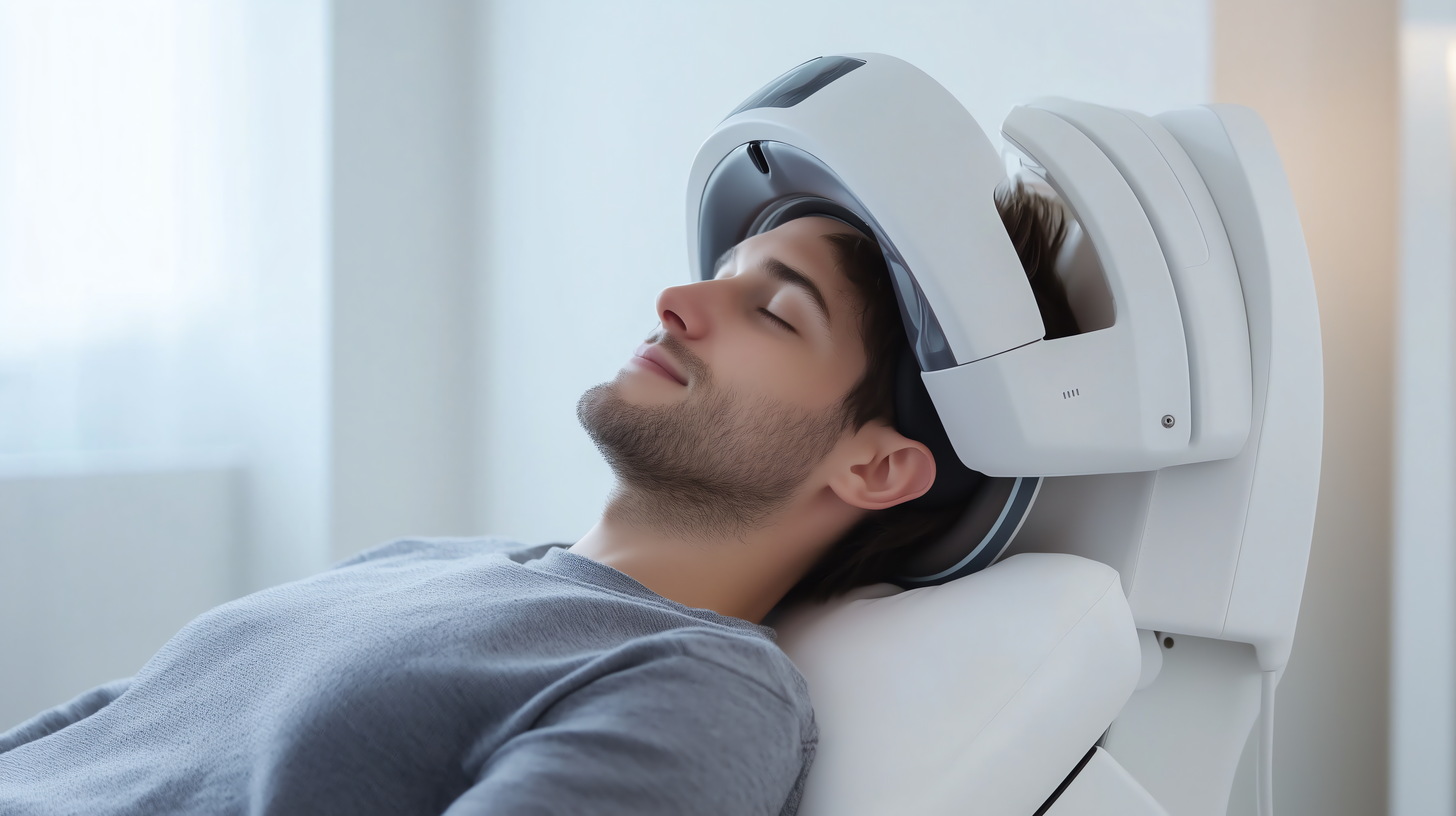
TMS uses a electromagnetic coil placed against the scalp to deliver focused magnetic pulses to specific areas of the brain. These pulses stimulate nerve cells in regions that are underactive in conditions like depression, OCD, and anxiety — particularly the left dorsolateral prefrontal cortex, which plays a central role in mood regulation and executive function.
Unlike medication, TMS works directly at the neurological level — without systemic side effects like weight gain, sexual dysfunction, or sedation. Unlike ECT (electroconvulsive therapy), TMS requires no anesthesia, causes no seizures, and has no effect on memory.
You're fully awake and alert throughout every session. Most people read, listen to music, or simply rest while the treatment is administered. Sessions take 20 to 40 minutes. When it's done, you get up and go about your day.
FDA-Cleared Indications & Clinical Applications
TMS has received FDA clearance for several specific indications — and is increasingly used off-label for conditions with strong supporting research. At South Orange County Wellness, TMS is available for the following:
Major Depressive Disorder
TMS has been FDA-cleared for treatment-resistant depression since 2008. It's particularly indicated for people who haven't responded adequately to one or more antidepressants. Multiple large-scale trials demonstrate significant, durable symptom reduction.
OCD
Deep TMS received FDA clearance for OCD in 2018. It targets the anterior cingulate cortex — a brain region involved in the obsessive-compulsive cycle — and is most effective when paired with ERP therapy, which is exactly how we use it.
Anxious Depression
In 2021, the FDA cleared an accelerated TMS protocol specifically for major depression with anxious features — recognizing that the anxiety component of depression requires targeted neurological intervention alongside mood treatment.
PTSD & Anxiety
Research into TMS for PTSD and generalized anxiety disorder is growing, with several studies showing meaningful symptom reduction. While not yet FDA-cleared for these indications, clinical evidence supports its use as an adjunct to trauma-focused therapy.
TMS at South Orange County Wellness is never offered as a standalone treatment. It's integrated into your clinical program — working alongside therapy, not instead of it. This is what the research consistently supports as most effective.
What a TMS Course Looks Like
Psychiatric Evaluation
Before starting TMS, you'll meet with our psychiatric team for a thorough evaluation — confirming clinical appropriateness, reviewing your history, and determining the right protocol for your situation.
Mapping & Setup
In your first session, the clinician will identify and map the precise location on your scalp for coil placement. This takes slightly longer than subsequent sessions — usually around 60 minutes.
Daily Sessions
Standard TMS protocols involve sessions five days a week over four to six weeks — typically 20 to 40 minutes each. You sit in a reclined chair, fully awake, while the coil delivers pulses. Most people feel a tapping or clicking sensation.
Ongoing Monitoring
Your clinical team monitors your response throughout the course. Adjustments to protocol can be made based on how you're responding. Most people begin noticing changes within two to four weeks.
No Recovery Time
When each session ends, you're done. No sedation, no downtime, no one to drive you home. You can go straight back to your clinical programming, work, or daily activities.
TMS vs. Medication vs. ECT
People considering TMS often want to understand how it fits alongside — or differs from — other treatment options. Here's a straightforward comparison:
TMS Therapy
- Non-invasive — no surgery, no sedation
- FDA-cleared for depression, OCD & anxious depression
- No systemic side effects
- No memory effects
- No downtime after sessions
- Works directly at the neurological level
Antidepressant Medication
- Systemic — affects the whole body
- Common side effects: weight gain, sexual dysfunction, fatigue
- Can take 4–8 weeks to assess effectiveness
- Many people require multiple trials to find the right fit
- Can be used alongside TMS
ECT (Electroconvulsive Therapy)
- Requires general anesthesia
- Involves induced seizure activity
- Can cause short-term memory effects
- Highly effective for severe, acute cases
- Typically used when other options haven't worked
TMS as Part of Your Treatment at SOCW
TMS at South Orange County Wellness is integrated into clinical programming — not offered as a walk-in service. Clients in our PHP, IOP, or individual therapy programs who are appropriate candidates can add TMS as an adjunct to their ongoing care.
The combination of TMS and psychotherapy is what the research consistently supports as most effective. TMS creates neurological conditions that make therapy more productive — and therapy gives the brain a framework for what to do with the changes TMS produces.
Your psychiatric team will determine appropriateness, protocol, and timing. If TMS isn't the right fit for your situation, they'll tell you clearly and help you understand why.
Does Insurance Cover TMS?
TMS coverage has expanded significantly in recent years. Many major insurance plans now cover TMS for qualifying diagnoses. Common coverage criteria include:
- Diagnosis of major depressive disorder or OCD
- Prior trial of one or more antidepressants without adequate response
- Documentation of treatment history from a provider
- Prior authorization from your insurance plan
Our admissions team will verify your specific benefits and walk you through what's covered before you commit to anything.
Interested in TMS Therapy?
Ask about TMS during your admissions conversation. Our team will verify your insurance, review clinical appropriateness, and walk you through the full process — no obligation.
Talk to AdmissionsFrequently Asked Questions About TMS Therapy
A different approach to a problem medication hasn't solved.
TMS works at the neurological level — and it works best alongside the clinical work you're already doing. Our team is here to help you figure out if it's the right fit.
Talk to Admissions